
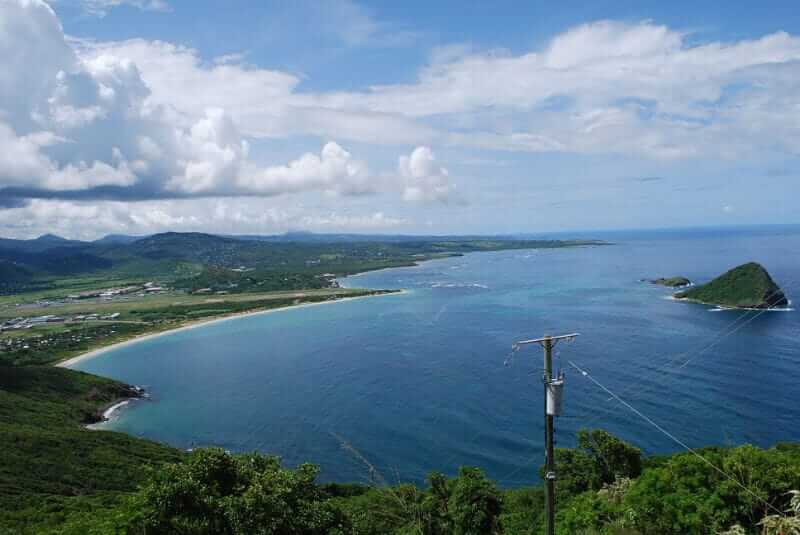
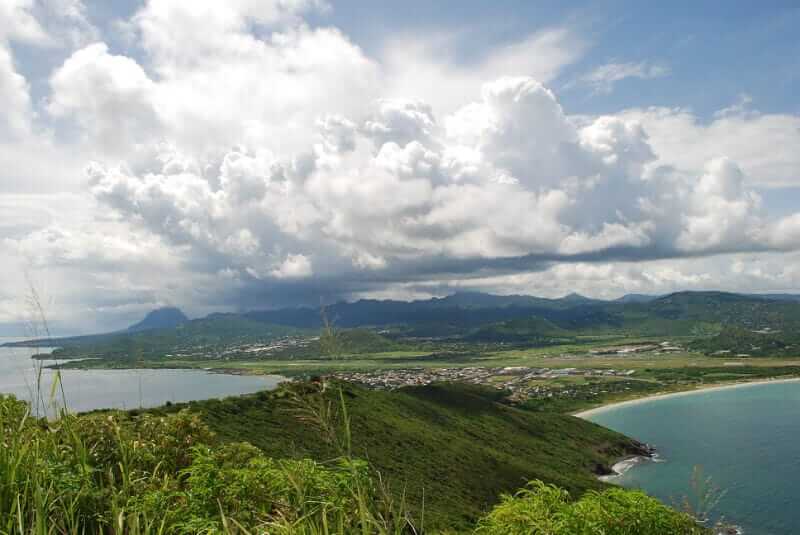
Saint Lucia’s second-largest town anchors the southern tip of the island and serves, by the Tourism Authority’s own description, as a hub for the surrounding districts of Laborie, Choiseul, Micoud, and Soufrière. Beyond Hewanorra International Airport, the town is home to a free trade zone and several of the island’s key exporters, including Windward & Leeward Brewery and Baron Foods — giving it a more industrious, working character than the postcard image most visitors carry of the island. It’s also home to genuine natural drama: Moule à Chique, one of the highest points on the island’s coastline, and the protected Maria Islands just offshore. Growing infrastructure and tourism investment in the south have kept Vieux Fort on the radar for buyers thinking about long-term appreciation rather than just immediate lifestyle appeal.
North of town – and the runway of the Hewannorra International Airport – During World War II, American forces opened a radar station on the hill of Morne le Blanc to help protect the then airfield. The world’s third highest light house still functions on a rugged and picturesque crag known as Moule á Chique which offers a great view of the southern half of the island. Vieux Fort is also home to the Hewanorra International Airport and our national stadium. The remnants are still visible today.
It is one of the larger relatively flat open areas on the island that seems destined for future commercial and light industrial development. Located there is the island’s modern brewery facility that produces, among other products, the local Piton beer which is an island favourite. There are several small communities which include Augier, Belle Vue, Black Bay, Grace, La Resource, Pierrot. Part of Vieux Fort is called Black Bay. It got its name because legend has it that the infamous pirate Blackbeard used this part of the country to stash his ill-gotten gains.
During the Second World War, Vieux Fort became a base for American troops. Some of the evidence can still be seen around town, such as the underground tunnel that runs from Clark Street all the way to St. Judes Hospital in Augier. It is said that this tunnel was used for storage of supplies and also a quick route to the hospital. Many people who today have never heard about this tunnel and if it truly exists. Numerous Amerindian sites and the remains of the once thriving sugar plantations are found in the area today. Over the centuries the influences of the Amerindians, Africans, Europeans, East Indians and Americans have given Vieux Fort, and much of the island’s south, a unique cultural and ethnic heritage.
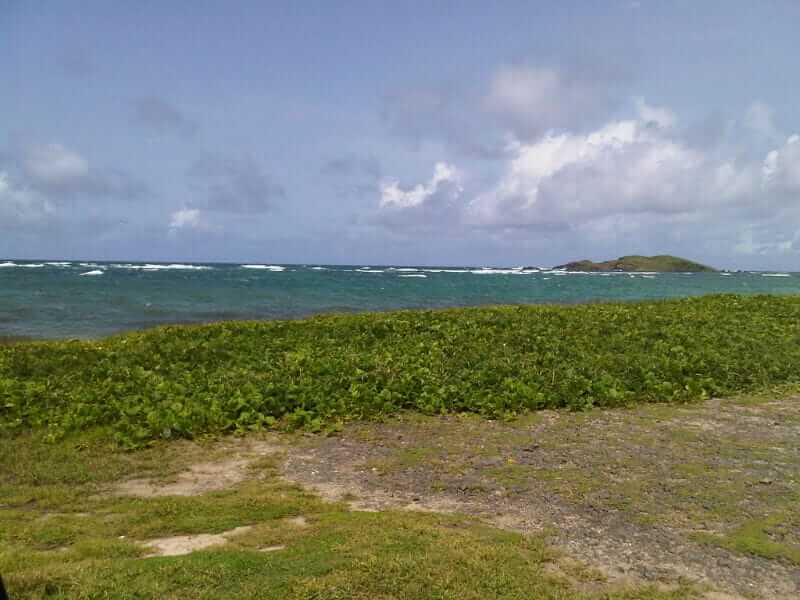
The Maria Islands are found just off the shore to the southeast of Vieux Fort. They are the home of two reptiles, the Saint Lucia Racer, the world’s rarest snake, and an interesting lizard called the Saint Lucia Whiptail, which are found nowhere else in the world. It is a nesting ground for leatherback turtles and is home to a species of iguana indigenous to St. Lucia also lots a migratory birds.
Whilst the majority of tourist activity in Saint Lucia is based on the West coast, some hotels are located in Vieux Fort Quarter.